
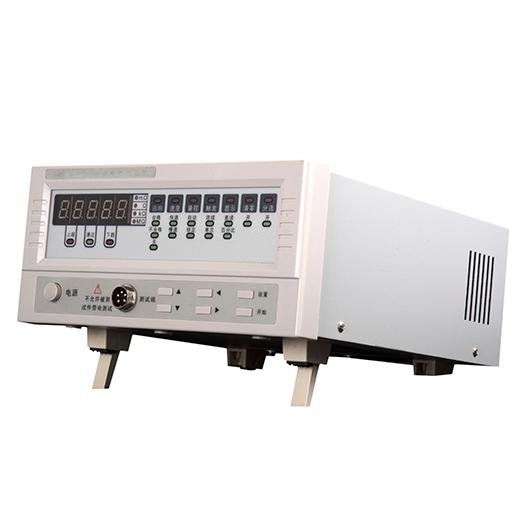
Power energy systems rely on low-resistance connections to avoid overheating and failures—and the DC Low Resistance Tester is the key tool for this. It detects mΩ-level resistance anomalies, solving hidden risks in grids, generators, and energy storage systems.
Power Grid: Detecting Cable & Connector Faults
Firstly, overhead lines and underground cables in power grids develop corrosion or loose connectors over time, increasing resistance. The DC Low Resistance Tester uses 4-wire Kelvin testing to measure cable resistance accurately, even in noisy industrial environments.
Moreover, its high-current output (up to 100A) penetrates oxide layers on connectors, revealing hidden defects that standard testers miss. This solution prevents cable overheating and grid outages, reducing maintenance costs by 40%.
Generator & Transformer: Ensuring Winding Integrity
Generators and transformers depend on intact windings for efficient power transfer. The DC Low Resistance Tester checks stator and rotor winding resistance, identifying short circuits or insulation degradation early.
Additionally, it stores historical test data, letting engineers track resistance changes over time. This predictive maintenance solution avoids sudden generator failures, which can cost power plants millions in downtime.
Energy Storage Systems: Validating Battery Connections
Secondly, lithium-ion battery packs in energy storage systems (ESS) suffer from loose busbar connections, causing uneven current distribution. The DC Low Resistance Tester measures busbar and cell tab resistance, ensuring consistent power flow.
Furthermore, its fast testing speed (≤3 seconds per point) supports high-throughput ESS production. This solves the problem of time-consuming manual testing, accelerating battery pack assembly without compromising quality.
Substation Equipment: Testing Switchgear & Grounding
Substation switchgear and grounding systems need ultra-low resistance to ensure safety. The DC Low Resistance Tester verifies switch contact resistance (typically ≤50μΩ) and grounding grid integrity, complying with IEC 61936 standards.
For example, it detects poor grounding connections that could lead to equipment damage during lightning strikes. This safety-focused solution reduces the risk of substation accidents and ensures regulatory compliance.
Renewable Energy: Optimizing Solar & Wind Systems
Finally, solar PV arrays and wind turbines rely on low-resistance connections for maximum energy output. The DC Low Resistance Tester checks PV module junctions and wind turbine generator connections, identifying power losses.
Its portable design lets technicians test on-site, solving the challenge of remote renewable energy installations. This optimizes energy yield by up to 5%, a significant gain for large-scale solar and wind farms.
Core Value: Precision That Powers Reliability
The DC Low Resistance Tester combines accuracy (±0.1% basic error) with practical features like portability and data logging. It’s more cost-effective than high-end testers, making it accessible to small and medium power companies.
In the power energy sector, it’s not just a tester—it’s a solution that prevents failures, optimizes efficiency, and ensures the stable supply of electricity to homes and industries.
Jetronl Instruments Co., Ltd. has specialized in the electronic measurement field for 35 years, covering various measurement needs across the entire electronic industry chain and providing precise measurement support.